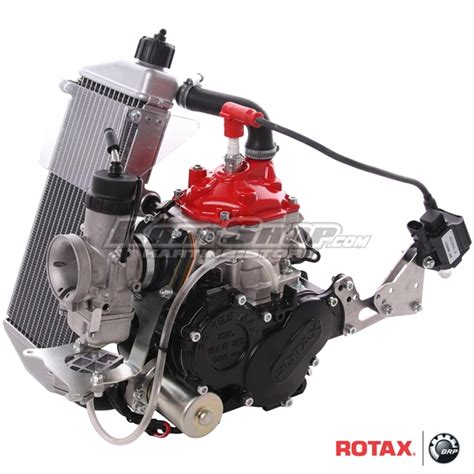
How does a Rotax Max engine work
So you wanna know about the Rotax Max engine, huh? It's basically the star of the karting world—a purpose-built 2-stroke racer that everyone talks about. People love it because it's dead reliable, packs a punch, and has this whole "Max" concept where engines come sealed and tuning is locked down. That means it's all about driver skill, not who's got the deepest pockets. Let's break down how this thing actually works, from its basic guts to the stuff that makes it different.
What is the basic 2-stroke cycle of a Rotax Max engine?
Like any 2-stroke, the Rotax Max does its thing in just two piston strokes—one complete crankshaft revolution. Compare that to four strokes in a typical engine, and you get why it's so light and powerful.
- Stroke 1 (Compression and Intake): Piston goes up, squishing the fuel-air mix in the combustion chamber. Down below, in the crankcase, it creates a vacuum. That vacuum pulls fresh mixture from the carburetor through a reed valve and into the crankcase.
- Stroke 2 (Power and Exhaust): Spark plug fires, boom—piston gets shoved down. That's your power stroke. As the piston drops, it first uncovers the exhaust port, letting spent gases escape. Then, a split second later, the transfer ports open, and that fresh compressed mix from the crankcase rushes in, pushing out the leftover exhaust. This is called scavenging. Then the piston heads back up, and the whole cycle starts over.
What makes the Rotax Max engine different from other 2-stroke kart engines?
The Rotax Max isn't just another 2-stroke slapped together. It's a carefully engineered package. What sets it apart? The sealed design, specific tuning, and these integrated systems that work together.
| Feature |
How it Works |
Benefit |
| Sealed Engine Concept |
Critical bits like the carb, exhaust, and cylinder head are locked down with tamper-proof bolts and lead seals. Done by the factory or certified centers. |
Strict parity between engines. No tuning mods allowed. Driver skill is everything. |
| Reed Valve Induction |
A one-way reed valve sits between the carb and crankcase. Opens only when the piston goes up (creating vacuum) and closes when it goes down (stopping backflow). |
Gives you precise fuel metering, better throttle response, and more low-end torque than piston-ported engines. |
| Integrated Exhaust System |
The exhaust pipe is a tuned resonant chamber. Its length and shape create pressure waves that help suck out exhaust and then push fresh charge back into the cylinder. |
This "exhaust tuning" is key for maximizing power at a specific RPM. It's what gives the Rotax Max its characteristic powerband. |
| Lubrication System |
Oil gets pre-mixed with the fuel—usually at a 1:50 or 1:40 ratio. The oil in the mix lubricates the crank, bearings, and cylinder walls as it flows through. |
Simplifies design, cuts weight, and makes sure everything stays lubed consistently over the engine's life. |
How does the Rotax Max engine's cooling system work?
All Rotax Max engines are liquid-cooled. That's a big deal for keeping performance steady during a race.
- Coolant Circulation: A water pump, driven by the crankshaft, pushes a coolant mix—water and antifreeze—through water jackets in the cylinder head and barrel.
- Heat Dissipation: The hot coolant then flows to a radiator at the front of the kart. Air from the kart's forward motion passes through, dumping the heat.
- Thermostat: There's a thermostat that keeps the coolant temperature in check. Makes sure the engine warms up fast and stays at the right temp—not too hot, not too cold.
What are the key maintenance tasks for a Rotax Max engine?
Even with the sealed design, you still gotta do regular maintenance to keep it running strong and lasting long.
- Piston and Ring Replacement: This is the big one. Replace the piston and rings every 10-15 hours of running. It's a standard, cheap job that stops catastrophic failure.
- Spark Plug Check: Look at and swap out the spark plug regularly. A worn or fouled plug can cause misfires and sap power.
- Air Filter Cleaning: Clean the foam air filter after every race day. A dirty filter chokes airflow and can let junk into the engine.
- Fuel System: Use fresh, good-quality fuel with the right oil mix. Stale fuel can cause poor running and leave deposits.
- Crankshaft and Bearings: These usually get replaced during a full engine rebuild, which is recommended every 50-70 hours.
What is the power output of a Rotax Max engine?
The Rotax Max comes in a few flavors, each with different power. Most common are the Junior Max for younger drivers and Senior Max for adults.
| Variant |
Displacement |
Approximate Power (HP) |
Typical Age Group |
| Micro Max |
60cc |
6-8 HP |
8-10 years |
| Mini Max |
60cc |
10-12 HP |
10-13 years |
| Junior Max |
125cc |
20-24 HP |
13-15 years |
| Senior Max |
125cc |
28-32 HP |
15+ years |
| DD2 (Twin Speed) |
125cc |
33-36 HP |
15+ years |
Power comes on smooth but with a strong, linear powerband. Makes the engine predictable and easy to drive for racers at any level.
How does the Rotax Max engine's ignition system work?
The Rotax Max uses a capacitive discharge ignition (CDI) system. It's simple, reliable, and cranks out high energy.
- Generator Coil: A magnet on the flywheel zips past a generator coil, creating an electrical pulse.
- CDI Unit: That pulse goes to the CDI unit, which stores the energy in a capacitor. When the trigger coil signals the right timing, the CDI unit releases that stored energy to the ignition coil.
- Spark Plug: The ignition coil steps up the voltage to thousands of volts, making a big spark at the plug to light the fuel-air mix.
- Timing: Ignition timing is fixed and non-adjustable in a sealed Rotax Max. Keeps performance consistent.
Frequently Asked Questions
Can you modify a Rotax Max engine?
No way, not legally in the Rotax Max class. The engine's sealed with tamper-proof bolts. Any tweaks to the carb, exhaust, cylinder head, or internals? That's strictly forbidden and gets you disqualified. The whole point is everyone runs the same engines.
What fuel does a Rotax Max engine use?
It runs on unleaded gasoline with at least 95 RON octane. You mix it with high-quality synthetic 2-stroke oil, usually at a 1:50 ratio—like 20ml of oil per liter of fuel—as the manufacturer says.
How much does a Rotax Max engine cost?
A new, sealed Rotax Max engine usually runs between $3,000 and $4,000 USD, depending on the variant and where you are. You can find used ones for way less, but you gotta check for wear and seal integrity.
Is the Rotax Max engine reliable?
Yeah, super reliable if you maintain it properly. The sealed design cuts down on user mistakes, and the engine's built to high standards. The secret to reliability? Follow the maintenance schedule, especially those piston and ring changes.
What is the difference between a Rotax Max and a Rotax DD2?
The Rotax DD2 (Direct Drive 2-speed) is a version of the 125cc Rotax Max. Main difference is the DD2 has a 2-speed gearbox built into the engine, giving you a wider powerband and higher top speed. The Senior Max is direct drive with a clutch and a single gear ratio.
Short Summary
- 2-Stroke Cycle: The Rotax Max completes a power cycle in two piston strokes, giving it a high power-to-weight ratio.
- Sealed Design: The engine is sealed to ensure parity, making driver skill the key factor in competition.
- Integrated Systems: It uses a reed valve, tuned exhaust, and liquid cooling for consistent, reliable performance.
- Regular Maintenance: Piston and ring replacement every 10-15 hours is the most critical task for longevity.
Similar articles
Recent articles